
A one-minute AI short drama needs less story than a short film and more structure than a random clip. Most creators skip the middle step. They jump from a promising idea straight into generation and end up with strong individual frames that never form a complete scene. The five-beat outline is the tool I use to close that gap.
I’m Claire Morgan. After years of writing short-form narrative and producing vertical video, I settled on a simple five-beat structure that works reliably for sixty-second pieces. It is short enough to finish in a few minutes and detailed enough to guide character references, shot lists, dialogue, and editing decisions. Every major tutorial on this site begins with some version of this outline.
Why Five Beats Work for Sixty Seconds
Sixty seconds is long enough for a beginning, a middle, and an end. It is too short for complex subplots or multiple status shifts. Five beats give the scene a clear arc without overloading the runtime.
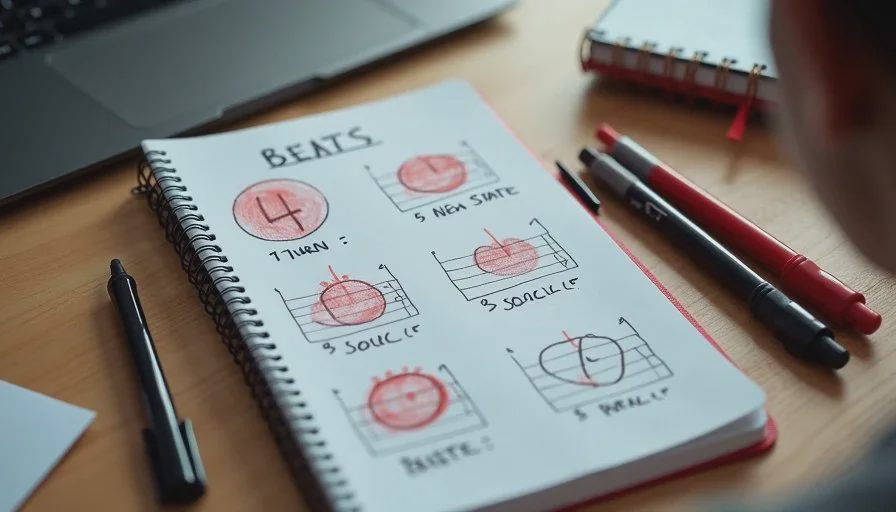
The beats are:
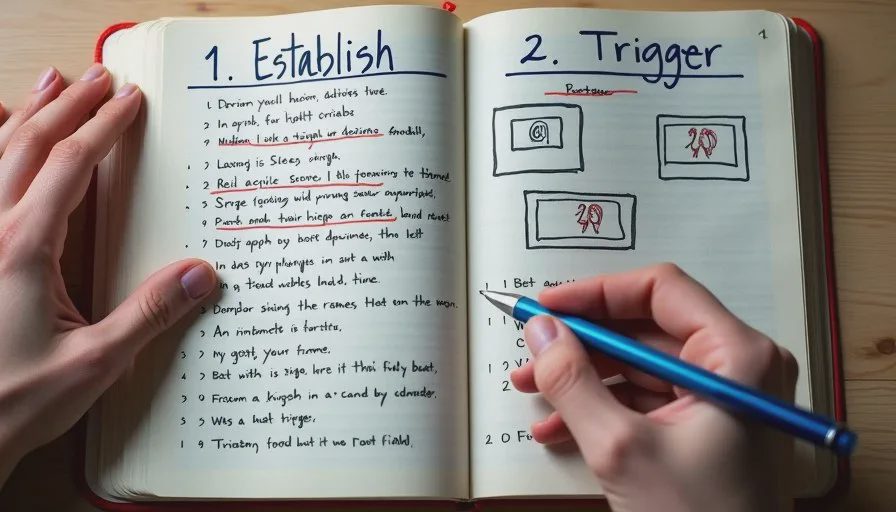
Establish
Trigger
Struggle
Turn
New State
Each beat has a specific job. When every generation is tied to one of these jobs, the final edit feels directed instead of assembled from leftover clips.
I tested longer and shorter versions early on. Three beats often felt abrupt. Seven beats created padding and diluted the emotion. Five consistently produced the cleanest results for the platforms I publish on.
Beat 1 – Establish
Show the character in their current state and location. The audience needs to know where they are and what “normal” looks like before anything changes.
Keep it simple. One or two shots are usually enough. Focus on posture, environment, and the character’s starting emotional temperature. Avoid loading this beat with heavy exposition. The goal is recognition, not explanation.
Example: A man sits on a park bench at dusk, coffee in hand, posture relaxed. The city moves behind him. We understand he is waiting or resting.
This beat also locks important continuity elements: wardrobe, key props, lighting direction, and face reference. Get these right here and later generations stay usable.
Beat 2 – Trigger
Introduce the event or information that creates pressure. The trigger can be a phone message, a person arriving, a sound, a realization, or an unexpected action. It must be visible and specific.
Weak triggers stay internal (“she starts feeling anxious”). Strong triggers are external and observable (“the phone lights up with a name she has been avoiding”).
The trigger should make the character’s original state no longer sustainable. That pressure is what drives the rest of the scene.
Beat 3 – Struggle
Show the character trying to handle the new pressure. This is where most of the human behavior lives. The struggle can be short — a few seconds of hesitation, a failed attempt to respond, a physical reaction — but it must be present.
Without struggle, the turn feels unearned. The audience needs to see the character process the trigger before the situation changes.
In practice this beat often becomes a medium shot or a close-up that holds long enough for the reaction to register. It is also the place where performance direction matters most: small shifts in eyes, breath, or posture usually play better than big gestures.
Beat 4 – Turn
Deliver the moment the situation or the character’s position changes. This is the peak of the sixty seconds. Everything before it builds pressure; everything after it shows consequence.
The turn should be clear and visible. A decision made, a line spoken, an object put down, a door opened, a step taken. Avoid purely internal turns that the camera cannot show.
I mark this beat in red on every outline. When I review generations, I ask one question first: does this shot serve the turn or distract from it?
Beat 5 – New State
End on the consequence. The character is now in a different position than they were at the start. The audience should feel that something has shifted, even if the shift is small.
This beat is often a wider shot that lets the new reality land. It can also be a final close-up that holds the emotional result. Either way, it needs to feel like an ending rather than an interruption.
A common mistake is cutting too early. Give the new state a second or two to register. The silence or stillness after the turn is often the most powerful part of the piece.
Putting the Five Beats into a Working Outline
Here is a complete example using a simple idea: “A woman decides whether to answer a difficult phone call.”
Establish: Woman sits at her kitchen table at night, phone face-up beside her, posture still.
Trigger: The phone rings. The name on the screen is visible.
Struggle: She looks at the name, reaches for the phone, pulls her hand back, breathes.
Turn: She picks up the phone and answers.
New State: She stands and walks into the next room, still on the call, leaving the kitchen empty.
This outline already contains everything needed for the next production steps: character goal (avoid or delay the conversation), obstacle (the incoming call), continuity must-haves (phone, kitchen table, wardrobe, lighting), and a clear shot list.
I write the outline by hand first. The physical act of putting the five lines on paper forces clarity. Digital notes are fine later, but the first pass works better on paper.
How the Outline Guides the Rest of Production
Once the five beats exist, later decisions become simpler.
Character references are built to support the emotional range required across the beats.
Shot lists are written to deliver one beat at a time.
Dialogue (if any) is limited to what the turn actually needs.
Editing follows the beat order instead of arranging the most beautiful clips.
When a generation fails, the outline also makes diagnosis faster. A beautiful shot that does not serve any beat can be discarded without guilt. A less polished shot that clearly delivers the struggle or the turn is kept and refined.
Common Problems and Practical Fixes
Problem: The establish beat runs too long.
Fix: Cut it to the minimum information the audience needs. One clear shot is often enough.
Problem: The trigger is invisible or internal.
Fix: Make the pressure external and observable. If the character “realizes something,” show the object or information that causes the realization.
Problem: The struggle feels flat.
Fix: Give the character a small, specific action to attempt and fail or hesitate over. Stillness only works if the audience already understands the pressure.
Problem: The turn is unclear.
Fix: Ask what the audience should understand at the exact midpoint of the piece. Then make that understanding visible.
Problem: The new state feels like an abrupt cut.
Fix: Hold the final image long enough for the change to register. Let the character’s body or the environment confirm the shift.
A Note on Flexibility
The five-beat structure is a tool, not a rule. Some scenes need a longer struggle. Some need a quieter turn. Some benefit from a brief sixth beat that lands the emotional residue. Use the structure as a starting point, then adjust based on what the specific story needs.
What I do not recommend is abandoning structure entirely and hoping the generations will supply the missing logic. They rarely do.
A good AI short drama still needs a human director. The five-beat outline is one of the simplest ways to stay in that role from the first sentence to the final export.
Take an idea you are currently sitting on. Write the five lines. Keep them visible while you generate. The difference in clarity is usually immediate.

Travellers Write
No letters yet — be the first traveller to write.