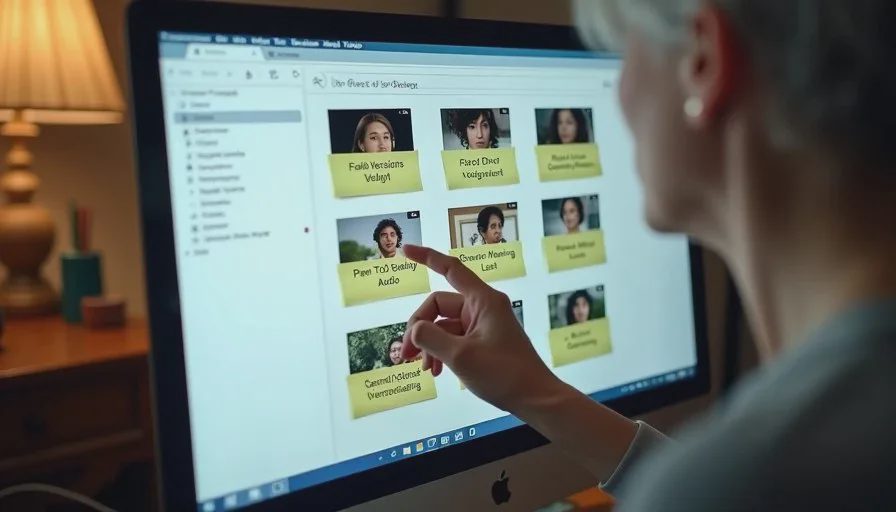
Every project leaves behind a folder of versions that did not make the cut. Most creators delete them. I started keeping a failed-version archive instead. Looking at the same problems appear across different scenes taught me more than the successful final cuts ever did. The five mistakes below are the ones that still show up in my own work with uncomfortable regularity. Each one includes the pattern I now watch for and the practical change that reduces it.
I’m Claire Morgan. This is not a list of beginner errors I have outgrown. It is a working record of the traps that remain easy to fall into even after you know better. If you recognize any of them in your recent projects, you are in good company.
Mistake 1: Accepting a Strong Face That Does Not Match the Lock
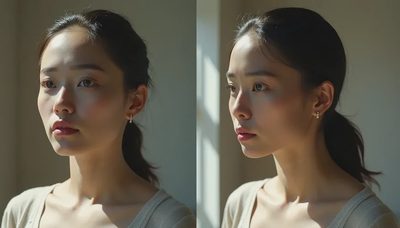
The pattern is consistent. A generation arrives with an appealing face—better lighting, sharper detail, a more interesting expression. It is close to the character bible but not identical. Because it looks stronger in isolation, I am tempted to keep it and “adjust” later shots to match.
The cost appears in the edit. Once two slightly different faces exist in the same scene, every cut between them becomes a small continuity break. The audience may not name the problem, but they feel the character becoming unstable.
What I do now
I keep the locked reference visible while reviewing. If the new face does not survive a direct side-by-side comparison, it is rejected even when it looks more polished. Attractive drift is still drift. The archive contains multiple examples where keeping the “better” face created more work than regenerating would have cost.

Mistake 2: Generating the Emotional Peak Before the Anchors Exist
When I am excited about a scene I often jump straight to the turning-point close-up or the highest-energy exchange. The resulting shot can look dramatic. It also becomes a poor foundation for the rest of the sequence because the quieter establishing and medium shots then have to chase an already-extreme performance and lighting setup.
What I do now
I force myself to generate the identity-critical anchors first: clean mediums and neutral-to-light close-ups that match the character lock and the planned lighting. Only after those exist do I generate the peak moments, using the anchors as references. The emotional shots stay more consistent, and the scene holds together with less repair.
The archive shows several projects where the climax was generated first and the rest of the scene never fully matched it. The final edits feel slightly off even when individual shots are strong.
Mistake 3: Letting the Camera Move Carry the Meaning
A slow push-in, a gentle track, or a revealing pan can make a shot feel purposeful. When the character’s behavior is unclear, that movement becomes a substitute for intention. The clip looks directed. The emotion remains vague.
What I do now
On any shot that feels emotionally soft, I first strip the camera move and watch the performance in a static frame. If the intention disappears without the move, the problem is not the camera—it is the behavior or the story placement. I fix the performance direction or the beat assignment before I put any movement back.
This habit has rescued multiple scenes that looked polished in motion and empty when stilled. The archive is full of beautiful moves that were covering weak intention.
Mistake 4: Treating Audio as a Final Polish Step
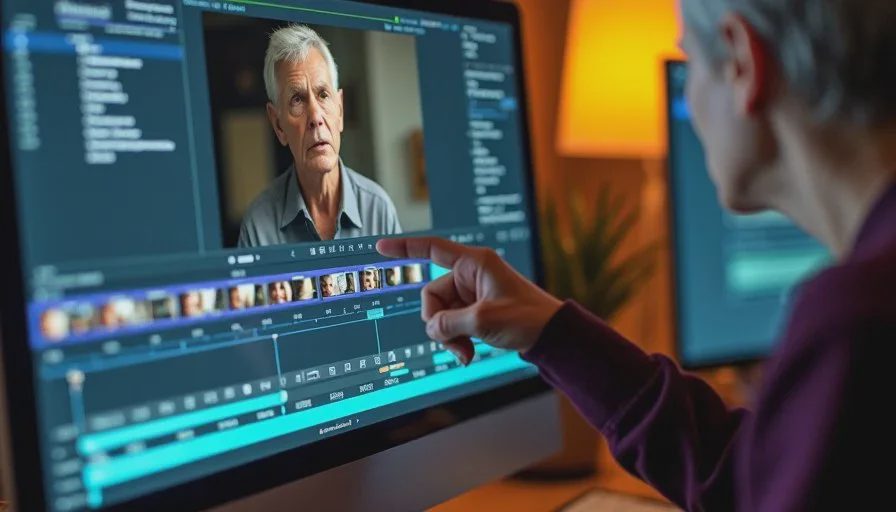
I still catch myself locking picture and only then discovering that the dialogue is flat, the pauses are awkward, or the lip sync is fighting the performance. At that point the picture is already invested, and audio repairs become compromises.
What I do now
I bring temporary voice into the process earlier. Even a rough read or an early voice generation placed against the selected stills reveals timing and intention problems while changes are still cheap. Final voice and sound design still happen late, but the dialogue is no longer a surprise at the end.
The failed-version folders contain several picture-locked sequences that had to be partially rebuilt once the real voice landed. Early audio checks have reduced that particular category of failure.
Mistake 5: Over-Generating Instead of Deciding
When a shot is not working, the temptation is to keep generating. More variations feel like progress. In practice, endless generation without a clearer decision about what the shot must accomplish usually produces a larger pile of near-misses rather than a solution.
What I do now
I limit the number of generations I will attempt before I stop and re-examine the brief. If the shot still fails after a focused batch, I return to the one-sentence job of the shot, the character intention, and the continuity requirements. Most of the time the problem is upstream of the prompt. Generating more versions of an unclear request rarely clarifies it.
The archive contains entire folders of beautiful, unusable variations that were created while I avoided making a harder story or performance decision. Fewer, more deliberate generations have proven more efficient.
How I Use the Failed-Version Archive
I do not review the archive after every project. I open it when I notice the same frustration appearing again. Seeing the older examples next to the current problem shortens the time it takes to recognize the pattern and apply the fix.
The archive is also useful for teaching. Showing a real failed version next to the repaired one is clearer than describing the principle in abstract. The mistakes are specific, the costs are visible, and the improvements are measurable.
What the Archive Has Taught Me Overall
Most recurring failures are not technical. They are decisions made too quickly or postponed too long: accepting a face that does not match, chasing emotion before structure, letting movement substitute for intention, delaying audio, or generating instead of deciding.
The tools will keep improving. The need for clear upstream decisions will remain. The failed-version archive is simply a record of what happens when those decisions are skipped.
A good AI short drama still needs a human director. Looking honestly at the versions that did not work is one of the ways that director stays sharp. The next project does not have to repeat every lesson the archive already contains.
If you do not already keep failed versions, consider saving a few of the most instructive ones from your current work. Label them with the problem they demonstrate. The next time the same issue appears, you will recognize it faster and waste less time rediscovering the same fix.


Travellers Write
No letters yet — be the first traveller to write.