
The first month of publishing AI short dramas in public felt different from every private test that came before it. Private work hides weaknesses. Public release surfaces them immediately—in the comments, in the retention graphs, and in the quiet realization that a shot you loved does not hold attention once it leaves your hard drive. Looking back at those first thirty days, a handful of decisions stand out as clearly worth changing.
I’m Claire Morgan. This is not a success-story summary. It is a practical post-mortem of the habits that helped, the ones that hurt, and the adjustments I would make if I were starting the public phase again from zero.
What I Did Right (and Would Keep)
A few choices held up well under real publishing pressure.
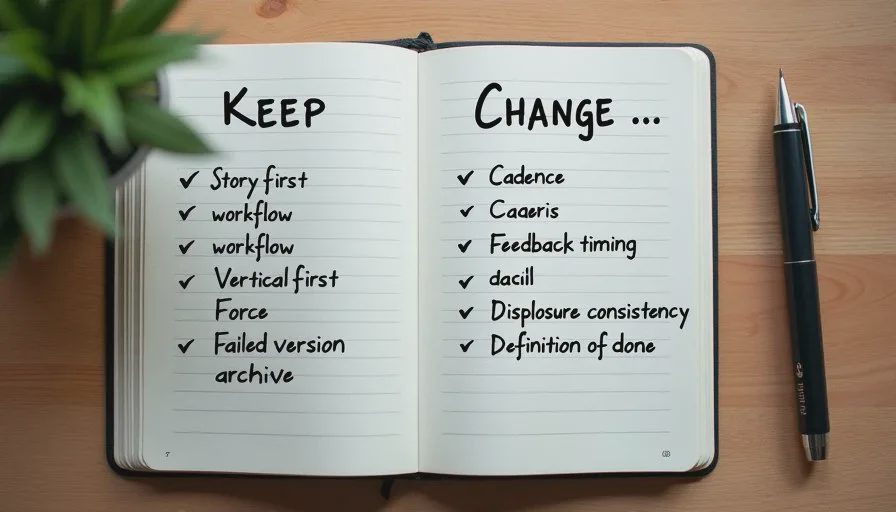
I already had a basic story-first workflow before the first public post. The five-beat outline, character lock, and short shot list prevented the worst kind of chaos. Even when individual generations failed, the structure gave me a way to diagnose the problem instead of simply generating more.
I also treated vertical delivery as the primary format rather than an afterthought. That decision saved multiple rounds of painful cropping and re-framing later.
Finally, I kept a simple failed-version archive from the beginning. Being able to look back at the exact mistakes that repeated proved more useful than any generic advice I read at the time.
These three elements—story structure, vertical-first framing, and an honest archive—are the parts I would not change.
What I Would Change: Publishing Cadence
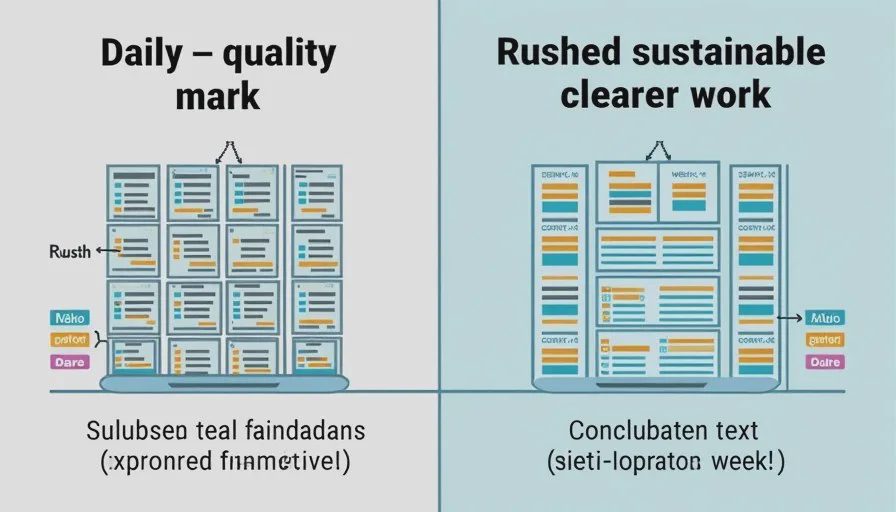
In the first thirty days I tried to publish too frequently. The impulse is understandable: algorithms appear to reward consistency, and it feels productive to keep feeding the feed. In practice the quality of the work dropped, the continuity problems increased, and the editing became rushed.
If I started again I would set a slower, more sustainable cadence—perhaps one solid piece every seven to ten days instead of forcing a higher frequency. A single coherent 60-second drama that holds together is more useful for learning (and for an audience) than three rushed ones that each contain avoidable flaws.
The archive shows the cost clearly. The pieces made under time pressure contain more face drift, flatter audio, and weaker emotional turns than the ones given proper production time.
What I Would Change: Audience Feedback Timing
I checked comments and view metrics too early and too often. Early numbers are noisy. A piece that under-performs in the first few hours can still find its audience; a piece that spikes early can still reveal structural weaknesses once the initial wave passes.
If I started again I would set a deliberate delay before reviewing performance data—perhaps 48 hours—and I would watch the piece myself on a phone, with sound off and sound on, before looking at any analytics. The direct experience of the work is still the clearest diagnostic. Metrics are secondary information.
This change would have protected the work from reactive edits made in response to incomplete data.
What I Would Change: Disclosure and Framing from Day One
I was slower than I should have been to standardize disclosure language. The first several posts used slightly different wording, and some early uploads relied too heavily on platform labels that were easy to miss.
If I started again I would write the core disclosure sentence before the first public post and use it consistently. I would also decide in advance how to handle questions about tools, process, and synthetic voices so the answers remained factual and calm rather than improvised under comment pressure.
Clear, repeated disclosure reduced confusion later. Establishing it on day one would have been cleaner.
What I Would Change: The Definition of “Done”
In the first month I often exported when the piece was “good enough to post” rather than when the emotional through-line was actually clear. The difference is subtle and expensive. A piece can look polished and still fail to make the audience understand what the character wants or what changed.
If I started again I would add one final hard gate before export: play the piece once with the question “What should a first-time viewer understand after sixty seconds?” If the answer is fuzzy, the piece is not done. This single check would have caught several early releases that looked finished and still felt hollow.
What Surprised Me
A few things were more important than I expected.
Continuity errors that felt minor on a desktop became glaring on a phone screen in a vertical feed. The smaller display and the passive viewing context made face and costume drift more noticeable, not less.
Audio problems were punished faster than visual ones. Viewers who watched with sound were quick to disengage from flat delivery or awkward pauses, even when the images were strong.
And the pieces that performed best relative to their production time were not the most visually elaborate. They were the ones with the clearest intention and the cleanest cause-and-effect in the sixty-second arc.
These observations only became obvious after the work was public. Private testing did not surface them with the same force.
A Practical Starting Adjustment List
If I were advising someone about to begin their own first thirty days of publishing, I would offer this short list:
Lock a sustainable cadence before the first post.
Standardize disclosure language on day one.
Treat vertical as the primary frame, not a conversion.
Delay metric-checking long enough to watch the work with your own attention first.
Define “done” as emotional clarity, not merely technical polish.
Keep the failed versions. They become the most honest curriculum.
None of these adjustments require new tools. They require clearer decisions about how the work will be made and released.
Closing the First Month
The first thirty days did not produce a perfect process. They produced a clearer map of where the process breaks under real conditions. That map is more valuable than any single successful post from the period.
A good AI short drama still needs a human director. Publishing is simply the stage at which the direction is tested in public. The lessons are sharper there. The cost of ignoring them is higher. And the opportunity to adjust is still available—especially if you treat the first month as data rather than as a verdict.
If you are about to begin your own public stretch, consider writing down the habits you will protect and the pressures you will refuse to let reshape the work. Thirty days later you will be glad the decisions were made in advance.


Travellers Write
No letters yet — be the first traveller to write.