
The moment an AI short drama leaves your hard drive and enters a public feed, disclosure becomes part of the work. Viewers, platforms, and increasingly regulators are paying attention to whether synthetic images, voices, and performances are identified as such. The question is no longer whether to say something. The question is what is useful, accurate, and sustainable to say.
I’m Claire Morgan. I treat disclosure as a production decision rather than a legal afterthought. This post outlines a practical framework I use when releasing AI-assisted short dramas. It is not legal advice. It is a working approach focused on clarity, consistency, and respect for the audience.
Why Disclosure Matters Beyond Compliance
Clear disclosure does three useful things. It sets accurate expectations so viewers are not misled about what they are watching. It protects the credibility of the work when the synthetic nature becomes obvious. And it creates a consistent habit that scales as rules and platform requirements evolve.
Vague or missing disclosure creates the opposite effects: confusion, eroded trust, and the need for reactive explanations later. In short-form feeds where context is limited, the cost of ambiguity is high.
I aim for disclosure that is honest without being defensive, and specific without becoming a technical manual.
What I Disclose as Standard Practice
For any short drama that uses AI-generated or AI-significantly-modified images, video, or voices, I include a clear statement that the piece contains synthetic media. The exact wording varies by platform and length, but the core information stays consistent:
The images and/or video were generated or substantially assisted by AI tools.
Any voices are synthetic or AI-assisted unless otherwise noted.
The work is a creative short drama, not a documentary record of real events or real people.
When a piece uses a mix of AI and traditionally captured elements, I specify which parts are synthetic. Blanket statements are easier to write and less useful to the viewer.
Where and How to Place the Disclosure
Placement affects whether the disclosure is actually seen.
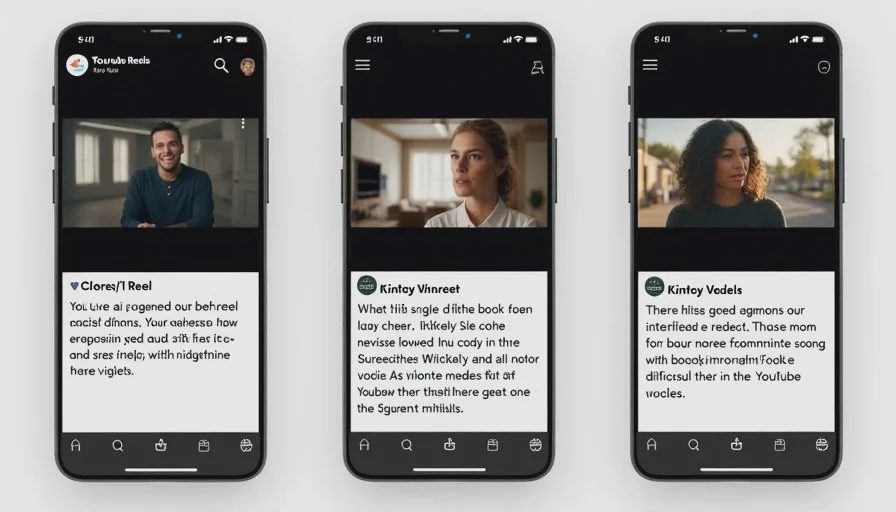
On TikTok, Instagram Reels, and YouTube Shorts I put a short disclosure in the caption and, when the platform supports it, in any dedicated AI or synthetic-media label. For longer captions I add one clear sentence near the top rather than burying it at the end.
On my own site or newsletter I use a slightly longer note that can include the main tool categories used (image generation, video motion, voice). I avoid long lists of every model version unless the technical details serve a tutorial purpose.
In the video itself I occasionally add a brief end card or a small on-screen line if the piece is likely to be downloaded or re-uploaded without its original caption. This is especially useful for scenes that could be mistaken for real footage.
The goal is that a reasonable viewer encounters the information without having to hunt for it.
Voices and Likeness: Extra Care
Synthetic voices and any use of a recognizable person’s likeness require more careful handling than generic characters.
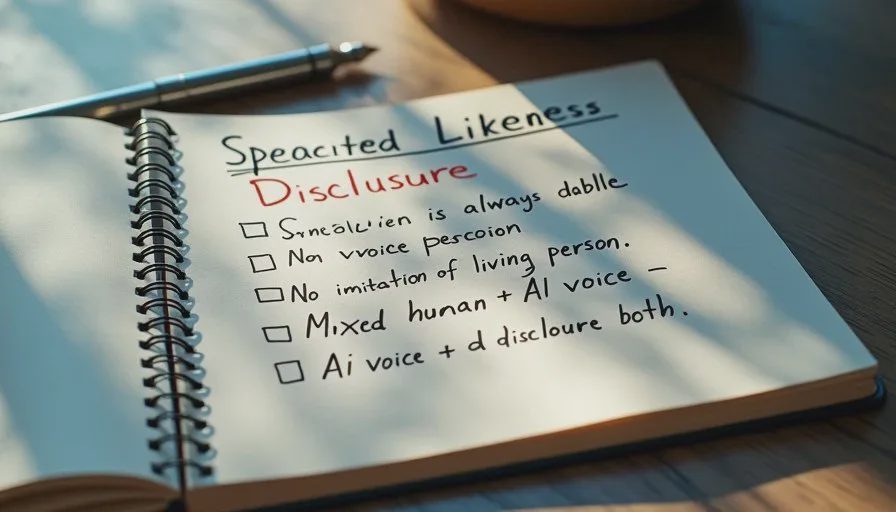
I do not release work that uses a synthetic voice designed to imitate a specific living person without clear authorization and disclosure. For original characters I still label the voices as synthetic so viewers understand they are not listening to a recorded human performance.
If a project involves a commissioned voice actor whose performance is then processed or cloned with permission, I disclose both the human origin and the AI processing. Transparency here prevents later confusion about what was performed and what was generated.
What I Do Not Disclose in Every Release
Not every technical detail serves the audience. I generally do not list every model name, version number, or parameter setting in the public caption. That information belongs in process posts, tutorials, or archive notes.
I also avoid lengthy justifications or defensive language. A clear, factual statement is more effective than a paragraph explaining why the use of AI is acceptable. The work itself should carry the creative argument; the disclosure simply identifies the nature of the media.
Platform Labels and Emerging Requirements
Major platforms are introducing their own labeling tools and rules for AI-generated content. I treat these as baseline requirements and then add my own clearer language when the platform label is too generic or easy to miss.
I also stay aware that requirements can change. Building a simple, repeatable disclosure habit makes it easier to adapt when new labels or fields appear. The underlying principle remains the same: the audience should be able to tell that they are watching synthetic or AI-assisted media.
A Practical Disclosure Checklist
Before publishing I run through these points:
Is there a clear statement that the piece contains AI-generated or AI-assisted images/video?
Are synthetic voices identified as such?
If any real person’s likeness or voice is involved, is authorization documented and disclosed appropriately?
Is the disclosure visible in the caption or platform field without requiring extra clicks?
Does the wording stay consistent with previous releases so the audience learns what to expect?
Is there a longer process note available elsewhere if viewers want more detail?
This checklist takes less than a minute and prevents most of the common omissions.
Handling Audience Questions
Even with clear disclosure, some viewers will ask how much was generated, which tools were used, or whether any real performance is involved. I answer factually and point to the original disclosure or to a process post when one exists. I do not treat curiosity as hostility. Most questions are attempts to calibrate trust.
When a piece is re-uploaded by others without the original caption, I accept that control is limited. Clear on-platform labeling and consistent public language still reduce the chance of sustained misrepresentation.
Disclosure as Part of Craft
I have come to see disclosure as part of the same craft discipline as continuity or sound design. It is a decision made during production and release rather than a problem solved after complaints appear. When the synthetic nature of the work is acknowledged cleanly, the audience can focus on the story, the performances, and the direction instead of wondering what they are looking at.
A good AI short drama still needs a human director. That responsibility includes deciding how the work presents itself to the people who watch it. Clear, consistent disclosure is one of the ways the director’s role continues after the final export.
Before your next release, write the one or two sentences that accurately describe the synthetic elements. Place them where they will be seen. Then publish. The habit becomes easier, and the work stands on cleaner ground.

Travellers Write
No letters yet — be the first traveller to write.